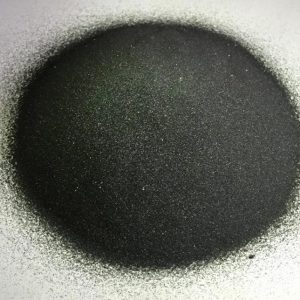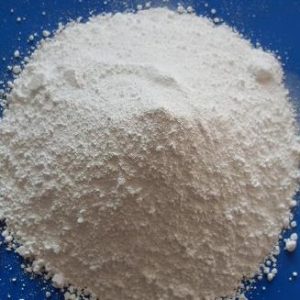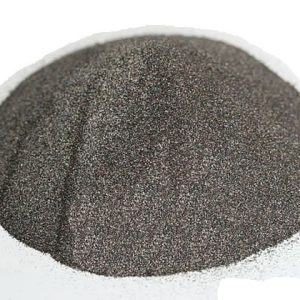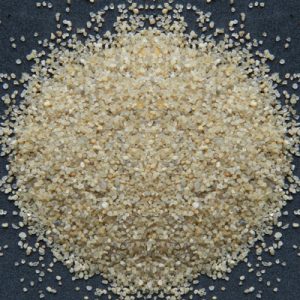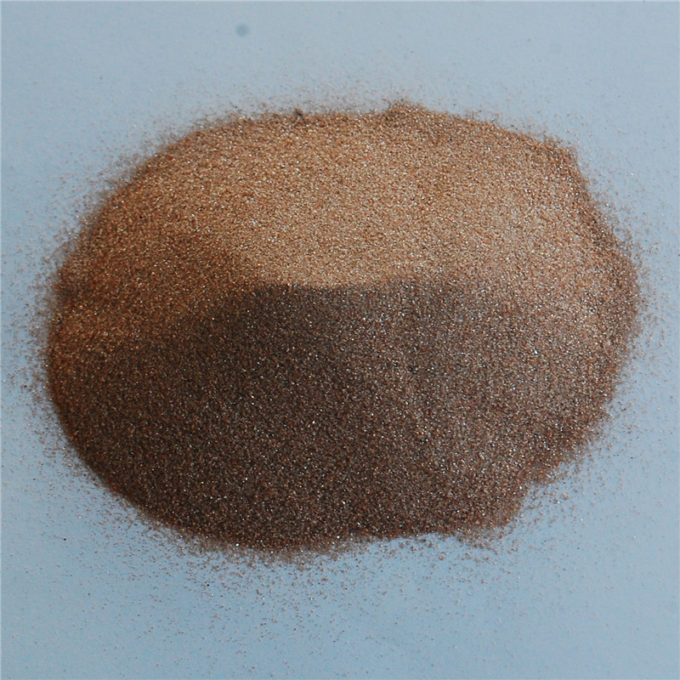
Here are the common info about Zircon Concentrate :
| Other names: | Zirconium Silicate, Zircon sand, Zircon |
| CAS number: | 14940-68-2 |
| Formula: | Zr [SiO4] |
| Technical Condition of Ukraine | TU-U 14-10-015-98 |
| Harmonize Commodity Code | 2615100000 |
Chemical properties:
| Contents, % | STANDARD | GRADE T | TYPICAL |
| ZrO2+HfO2 min | 65 | 65 | 65-66 |
| ТiO2 max | 0,4 | 0,2 | 0,2 |
| Al2O3 max | 2 | 2 | 1 |
| Fe2O3 max | 0,1 | 0,1 | 0,08 |
| P2O5 max | 0,12 | ||
| SiO2 max | 32 | ||
| Th+U max | 320 ppm | 320 ppm | 320 ppm |
| Aef, kBq/kg, max | 4,0 | 4,0 | < 3 |
| Residue on sieve №0315 | None | None | None |
Physical description and properties:
| Appearance: | Light pink free running sand |
| Grain shape: | Rolled, elongated |
| Grain color: | Pink, purple, red-brownish |
| Melting point: | 2200 °С |
| Specific Gravity: | 4650 – 4750 kg/m3 |
| Bulk density: | 2650 – 2740 kg/m3 |
| Grain size: | 63 -160 mkm |
| Flammable: | Nonflammable |
| Solubility in Water: | Insoluble |
| Angle of friction: | 30° |
| Hardness: | 7-8 |
Consistency:
| Minerals | Contents, % |
| Zircon: | 98-99 |
| Rutile/ Ilmenite: | 0,1-0,3 |
| Monazite: | 0,02 |
| Kyanite: | 0,5-2,5 |
| Quartz: | 0,05 – 0,2 |
Storage: in closed containers or bags, protect from physical damage. Terms of storage unlimited.
| Sieve Aperture (microns) | Cumulative retained, % |
| 200 | 0,1 |
| 160 | 1 |
| 100 | 25 |
| 63 | 99 |
Note: We are actively receptive to considering opportunities for improved quality concentrate supplies.
What is Zircon Concentrate or Sand?
Zircon sand is a naturally occurring mineral composed of zirconium silicate (ZrSiO4). It is known for its high refractory nature and thermal stability. It finds applications in ceramics, refractories, foundry molds, and high-temperature industries.
Also, it is used in the production of zirconium compounds and as an additive in premium glass manufacturing.
Where is Zircon Found?
Zircon is found worldwide in heavy mineral sand deposits. Major sources include Australia, South Africa, India, Brazil, and the United States.
It is also found in smaller quantities in China, Russia, Ukraine, and Mozambique.
How is Zircon Concentrate Mined?
Zircon is primarily extracted through conventional mining methods. Below are the steps involved:
Exploration: Geological surveys and assessments are conducted to identify potential zircon-rich areas. This involves analyzing geological formations and mineral compositions.
Extraction: Mining operations are established to extract heavy mineral sand deposits that contain zircon. This is achieved through open-pit or underground mining techniques, depending on the depth and accessibility of the deposit.
Concentration: After extraction, the mined material undergoes a concentration process to separate zircon from other minerals. Various techniques such as gravity separation, magnetic separation, and electrostatic separation are employed to concentrate the zircon.
Beneficiation: The concentrated zircon undergoes further processing to enhance its purity and quality. Beneficiation methods may include washing, drying, and chemical treatments to remove impurities and improve zircon’s properties.
Refining: The refined zircon may undergo additional processing steps, such as milling and classification, to achieve the desired particle size and quality specifications.
Packaging and Shipping: The final zircon product is packaged according to customer requirements and transported for distribution to various industries that utilize zircon.